.webp)








Life on the Giant: The Wandering Village's Monumental Evolution
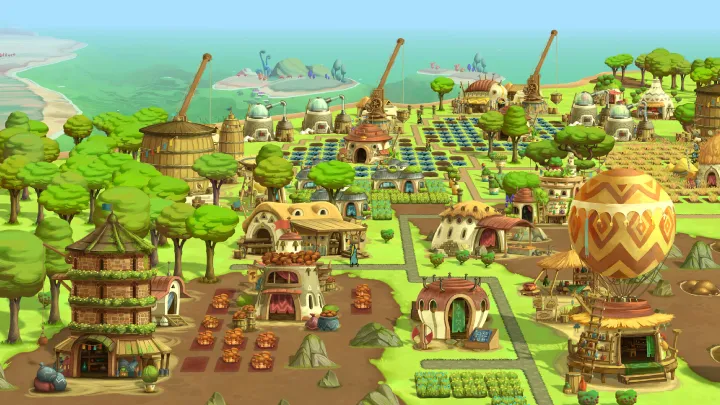
The Wandering Village, the unique city-builder and survival game where civilization thrives on the back of a colossal, wandering creature named Onbu, has reached a new epoch. With the introduction of the massive Nomad's Compass and Deep Jungle Echoes updates, the game has deepened its core mechanics, expanded its world, and introduced new layers of strategic complexity, transforming the journey from a gentle survival exercise into a grueling, yet rewarding, symbiotic epic. This feature explores how these updates have redefined the player's relationship with Onbu and challenged the established norms of life atop the moving titan.

Onbu Care: Symbiosis Redefined
The most critical and anticipated overhaul came with the Nomad's Compass update: the complete redesign of the Onbu Care System. Previously, managing Onbu felt largely reactive; now, it is an integrated, proactive part of village management, crucial for survival.
The New Onbu Health and Mood
Onbu's well-being is no longer a simple health bar. It is now measured by two primary, interrelated metrics: Physical Health and Mental State (Mood).
- Physical Health: Governed by the giant's nutritional intake, exposure to biomes, and the management of new afflictions like Fungal Infections (contracted in humid zones) or Desert Ailments (dehydration and heatstroke). Treating these requires advanced facilities like the Medical Herb Garden and the specialized Ailment Clinic.
- Mental State (Mood): Reflects Onbu's contentment and stress levels. A low mood can lead to erratic behavior, such as Slowing Down (drastically reducing travel speed) or, critically, Shaking Off structures, permanently destroying buildings that are poorly secured. Maintaining a high mood requires constant interaction via the Communication Hub and ensuring its needs are met.
The Onbu Direction Control Rework
Perhaps the most impactful change to the simulation aspect is the expanded control over Onbu's direction. While the player still cannot directly steer, the new Guidance Mechanism adds strategic depth:
- Trust Levels: Onbu now has a dynamic Trust Level influenced by its Mood and the regularity of feeding/care. High Trust is mandatory for successful guidance.
- Guidance Tasks: Instead of simple commands, the player now sends Guidance Task Teams from the Communication Hub to gently encourage Onbu toward preferred Biomes (e.g., Encourage Towards Forest). This task takes time and resources, forcing players to anticipate environmental changes far in advance.
- Forced Stops: At critical moments, the new Toxin Neutralizer Injection can be developed and administered (at a huge cost to resources and Trust) to force a brief, vital stop in hostile terrain, enabling rapid scavenging or emergency repairs.
This rework elevates Onbu from a platform to a deeply simulated character whose needs and feelings directly impact the entire village's survival.
The Deep Jungle Echoes: New Biome and Tech
The Deep Jungle Echoes update introduced a substantial new environment and a corresponding technological tree, demanding a fresh approach to resource management and village layout.
The Perils of the Jungle Biome
The Jungle Biome is a dense, humid, and resource-rich area, but its challenges are unique and punishing.
Environment Hazards
- Poisonous Fungi: Unlike the dry spores of the Desert, the Jungle features large, colorful fungi that release Toxic Spores when disturbed, sickening villagers and quickly spreading Fungal Infections to Onbu. Building the new Fungicide Sprayer attachment is essential.
- Overgrowth: The dense, humid air and fast-growing plant life cause exposed structures to decay rapidly. Players must utilize the new Treated Lumber material (harvested and processed locally) for all structures in this biome, increasing construction complexity.
- Resource Spikes: The Jungle is rich in Exotic Fruits and a new resource, Bio-Resin, vital for advanced tech. However, the travel speed is significantly slower due to the density, meaning players spend more in-game days in danger.
The Bio-Resin Technology Tree
Surviving the Jungle requires investing heavily in the new Bio-Resin Technology Tree. This tree focuses on sustainable energy and protection.
- Biomass Converters: An advanced power source that generates clean energy by processing the abundant jungle vegetation, replacing the need for traditional coal or wind power in this biome.
- Self-Cleaning Structures: Buildings upgraded with Bio-Resin coatings become immune to the humidity and spore-related decay, reducing the maintenance burden on villagers.
- The Jungle Lookout: A new, specialized lookout tower that can detect Toxic Spores and incoming heavy rains, allowing players to prepare preventative measures before environmental damage occurs.
The Jungle Biome effectively splits the game into two distinct survival challenges: resource scarcity in the Desert versus environmental saturation and decay in the Jungle.
Infrastructure and Optimization: The Nomad's Compass Innovations
The Nomad's Compass update not only focused on Onbu but also provided critical new tools for optimizing village efficiency and managing long journeys.
Villager Specialization and Roles
Villagers are no longer generic workers. They can now be assigned specific Roles through the new Training Hall, increasing output efficiency but requiring unique resources for training.
Role Examples
- Master Scavenger: Increases the yield of Scavenging Teams by 50% but requires rare Ancient Artifacts (found only during special events) for training.
- Master Builder: Halves the construction time of all new buildings but is less efficient at other tasks.
- Onbu Whisperer: Significantly improves the success rate of Guidance Tasks and passively increases Onbu's Mood.
This system adds a new layer of micromanagement and long-term planning, as players must decide whether to optimize a few key villagers or maintain a flexible, general workforce.
The Emergency Buffer System
Addressing the punishing nature of resource depletion while traversing dangerous biomes, the Emergency Buffer System provides a strategic safety net.
- Secure Storage: Players can designate specific storage facilities as Emergency Buffers. Resources stored here cannot be used by standard production chains.
- Automated Release: If a critical resource (e.g., food or water) drops below a set threshold, the Buffer automatically releases the reserves, providing a short window of time to correct the supply issue.
- The Cost of Safety: Maintaining the Buffer requires dedicated Villagers and specialized storage containers that themselves consume construction resources, meaning the safety net is not free.
This system rewards players who prioritize long-term stability and strategic saving over immediate consumption, crucial for surviving the extended trips through the new, difficult biomes.
The Future: A Complete Simulation
The Wandering Village's latest updates have solidified its place as a unique, deeply complex city-builder. The integration of Onbu as a complex, volatile element of the simulation—rather than just a backdrop—has been the most significant improvement. Players must now carefully balance the needs of their human community with the vast, unpredictable demands of the giant creature beneath their feet.
The challenges are steeper, the consequences of failure are more severe (losing an entire section of your village to an angry Onbu shake-off), and the strategic planning must span weeks of in-game time. With the introduction of the Jungle Biome and the promise of future environments and technologies, the journey atop the giant is more demanding and rewarding than ever before.
The success of these updates proves that the core concept of The Wandering Village is robust, and the developers are committed to evolving the relationship between the village and its living foundation into a truly unforgettable symbiotic survival experience.